An analysis of PM, NOx, SO2 and CO emissions by the University of Maryland and Johns Hopkins University indicates that Baltimore’s two incinerators cause nearly $100 million in annual health damages to residents across the region.

Medical Waste Incinerator
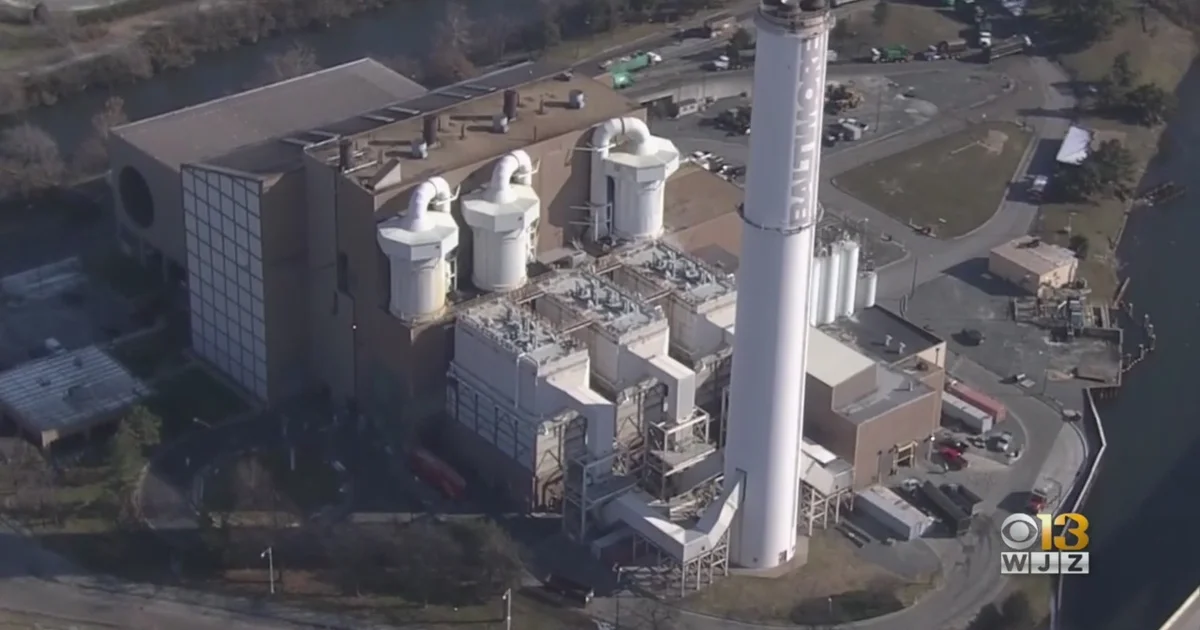
One of the biggest polluters in Curtis bay.
Baltimore’s two major incinerators, the Wheelabrator/BRESCO trash incinerator and the Curtis Bay Energy medical waste incinerator, have become focal points in the city’s environmental justice movement.
The Context
The BRESCO/WIN Waste facility was constructed in 1986 in South Baltimore despite significant opposition from residents and city planners, many of whom argued that North Baltimore had originally been designated for waste infrastructure development. Three years later, in 1989, Curtis Bay Energy opened nearby as what would become the largest medical waste incinerator in the United States. Community organizations contend that both facilities were intentionally concentrated in historically industrial, predominantly working-class neighborhoods already facing elevated exposure to air pollution from ports, rail infrastructure, chemical plants, and heavy trucking corridors.

Impact Summary
$53.8M
Health damage from exposure
200K+
Tons of waste
Baltimore’s Wheelabrator/BRESCO incinerator produces approximately 200,000 tons of ash each year that must be landfilled.
1123
Tons of NOx
a pollutant strongly linked to smog formation, respiratory disease, and nitrogen pollution in the Chesapeake Bay. According to presentations and technical comments submitted by the Environmental Integrity Project (EIP), the Wheelabrator facility has historically ranked among the highest NOx emitters in Maryland despite producing relatively modest amounts of electricity compared to large power plants.
Researchers warned that nitrogen pollution contributes to algal blooms, oxygen-depleted “dead zones,” and broader ecological stress within the Bay ecosystem.

Outpacing Rules
Under revised NOx RACT (Reasonably Available Control Technology) standards, BRESCO was required to meet a 150 ppm NOx limit on a 24-hour average beginning in May 2019, followed by a stricter 145 ppm rolling 30-day average beginning in May 2020. Maryland projected these rules would reduce emissions by approximately 200 tons of NOx per year, though environmental groups argued the reductions were still insufficient given the facility’s overall pollution burden. Even after implementation of the rules, MDE estimated that BRESCO would continue emitting roughly 900 tons of NOx annually.
Projected Opportunities
Environmental Integrity Project (EIP) analyses argued that significantly deeper reductions were technologically feasible. The organization pointed to advanced Selective Catalytic Reduction (SCR) and Regenerative Selective Catalytic Reduction (RSCR) systems capable of achieving 75–80% NOx reductions at comparable municipal waste combustors. EIP also noted that Baltimore’s proposed Energy Answers incinerator had been designed around advanced controls targeting NOx emissions as low as 45 ppm, while BRESCO’s actual annual emissions averaged approximately 168 ppm in 2015.
NOx emissions from BRESCO have also been linked to environmental degradation beyond air quality impacts. According to environmental litigation and technical analyses, the facility deposited approximately 6,570 pounds of nitrogen pollution per year into the Chesapeake Bay watershed through atmospheric deposition.
Big Impact
6th
Higgest emiter in Maryland in 2015
Dust Contamination
2015
Notice of violation for visible emissions and fugitive dust.
Meaning
Pollution Burden
PM2.5 (fine particulate matter) penetrates deep into
lungs and bloodstream:
Triggers inflammation
Worsens asthma and COPD
Increases risk of heart attacks and strokes
Insight
What Could Be Done
The Montgomery County Resource Recovery Facility became a major benchmark in the debate because it implemented upgraded low-NOx combustion systems in 2009 and subsequently reduced emissions from more than 1,000 tons annually to approximately 441 tons by 2015. Environmental advocates argued this demonstrated that BRESCO could achieve substantially larger reductions if more aggressive pollution-control investments were required.
A Heavy Burden
Public health advocates argue that the burden of BRESCO’s NOx pollution falls disproportionately on South Baltimore communities already exposed to cumulative industrial emissions from highways, shipping terminals, rail yards, wastewater treatment plants, and chemical facilities. Baltimore City has long recorded asthma hospitalization and emergency room visit rates substantially higher than the Maryland average, particularly in neighborhoods closest to industrial corridors surrounding the incinerator.
Community Resistance Groups
1
Due to community pushback, institutions such as John Hopkins and Christiana Care ended their business with Curtis Bay Energy based on community
concerns.
2
Free Your Voice student leaders: We believe that governments, schools, and hospitals that promise to serve, heal, and educate us must not fund projects that harm us.
3
Free Your Voice (formerly South Baltimore Community Land Trust): Youth-led organization that successfully fought the nation’s largest trash-burning incinerator (Energy Answers) proposed for Curtis Bay
4
South Baltimore Community Land Trust: Working for environmental and housing justice